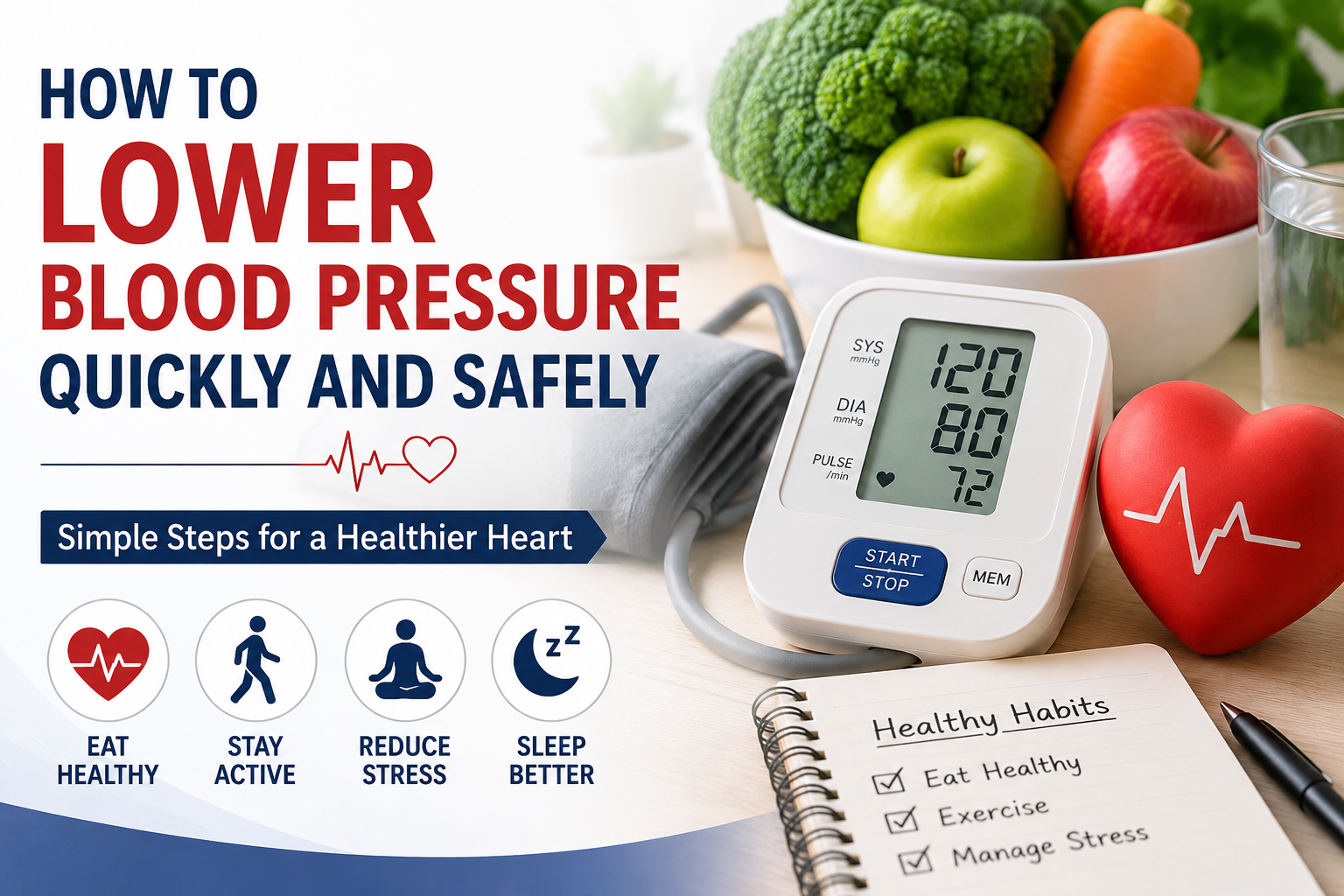
High blood pressure affects nearly half of adults in the United States, yet many people don’t realize they have it until serious symptoms appear. Often called the “silent killer,” high blood pressure—or hypertension—can quietly increase your risk of heart disease, stroke, kidney damage, and other major health problems.
The good news? In many cases, you can lower blood pressure quickly and safely with the right lifestyle changes, healthy habits, and medical guidance when needed.
Whether you’ve recently had a high reading, want to improve your heart health, or are looking for natural ways to manage hypertension, this guide covers everything you need to know.
What Is Considered High Blood Pressure?
Blood pressure measures the force of blood pushing against your artery walls. It’s recorded using two numbers:
- Systolic pressure (top number): pressure during heartbeats
- Diastolic pressure (bottom number): pressure between beats
According to the American Heart Association:
| Category | Blood Pressure Reading |
|---|---|
| Normal | Less than 120/80 mm Hg |
| Elevated | 120-129 / less than 80 |
| High Blood Pressure Stage 1 | 130-139 / 80-89 |
| High Blood Pressure Stage 2 | 140+ / 90+ |
| Hypertensive Crisis | 180+ / 120+ |
If your reading is extremely high or accompanied by symptoms like chest pain, shortness of breath, severe headache, or blurred vision, seek emergency medical care immediately.
Can You Lower Blood Pressure Quickly?
Yes—but safely lowering blood pressure depends on how high it is and what’s causing it.
Small changes can sometimes lower blood pressure within hours or days. Long-term improvements usually happen over weeks to months with consistent healthy habits.
The key is avoiding dangerous “quick fixes” or extreme methods that could cause dizziness, fainting, or other complications.
10 Safe Ways to Lower Blood Pressure Quickly
1. Take Slow, Deep Breaths
Stress and anxiety can temporarily spike blood pressure. One of the fastest natural ways to calm your body is controlled breathing.
Deep breathing helps:
- Relax blood vessels
- Slow heart rate
- Reduce stress hormones
Try this simple breathing exercise:
- Sit comfortably
- Inhale slowly for 4 seconds
- Hold for 4 seconds
- Exhale for 6 seconds
- Repeat for 5–10 minutes
Many people notice a small drop in blood pressure after practicing slow breathing.
2. Drink More Water
Dehydration can make blood pressure rise because your blood vessels constrict when your body lacks fluids.
Drinking water may help:
- Improve circulation
- Support heart function
- Prevent temporary blood pressure spikes
Aim for consistent hydration throughout the day, especially during hot weather or exercise.
3. Reduce Sodium Intake Immediately
Americans consume far more sodium than recommended, mainly from processed and restaurant foods.
Too much salt causes the body to retain fluid, increasing pressure on blood vessels.
Quick ways to cut sodium:
- Avoid fast food
- Skip canned soups and processed snacks
- Choose low-sodium products
- Limit deli meats and frozen meals
The CDC recommends most Americans stay under 2,300 mg of sodium daily.
4. Go for a Short Walk
Physical activity helps your heart pump blood more efficiently.
Even a 20–30 minute walk can:
- Improve circulation
- Reduce stress
- Lower systolic blood pressure
Walking is especially effective after meals or during stressful days.
If you’re not active regularly, start slowly and increase your pace gradually.
5. Eat Potassium-Rich Foods
Potassium helps balance sodium levels and relax blood vessel walls.
Some of the best potassium-rich foods include:
- Bananas
- Avocados
- Sweet potatoes
- Spinach
- Beans
- Yogurt
- Salmon
Adding these foods to your diet may help lower blood pressure naturally over time.
6. Limit Caffeine and Energy Drinks
Caffeine affects people differently, but it can temporarily increase blood pressure in some individuals.
Energy drinks are especially concerning because they often combine:
- High caffeine
- Excess sugar
- Stimulants
If you notice spikes after coffee or energy drinks, try reducing intake and monitor your readings.
7. Avoid Alcohol and Smoking
Alcohol and tobacco both put stress on the cardiovascular system.
Smoking:
- Narrows blood vessels
- Raises heart rate
- Damages artery walls
Heavy alcohol use can also contribute to chronic hypertension.
Quitting smoking and reducing alcohol intake can improve blood pressure significantly over time.
8. Try the DASH Diet
One of the most recommended eating plans for hypertension is the DASH diet (Dietary Approaches to Stop Hypertension).
The DASH diet focuses on:
- Fruits
- Vegetables
- Whole grains
- Lean protein
- Low-fat dairy
- Reduced sodium
Research shows the DASH diet can lower blood pressure within a few weeks.
9. Manage Stress Levels
Chronic stress keeps your body in a constant “fight or flight” mode, increasing blood pressure over time.
Stress-reducing habits include:
- Meditation
- Yoga
- Prayer
- Spending time outdoors
- Listening to calming music
- Better sleep habits
Even small daily stress-management routines can make a noticeable difference.
10. Take Prescribed Medication Correctly
If your doctor prescribed blood pressure medication, taking it consistently is critical.
Common medications include:
- ACE inhibitors
- Beta blockers
- Diuretics
- Calcium channel blockers
Never stop medication suddenly without medical advice.
If your blood pressure remains high despite treatment, talk to your healthcare provider about adjusting your plan.
Foods That Help Lower Blood Pressure
Diet plays a huge role in heart health.
Here are some of the best foods for lowering blood pressure naturally:
Leafy Greens
Spinach, kale, and collard greens contain potassium and magnesium.
Berries
Blueberries and strawberries contain antioxidants linked to better heart health.
Oatmeal
High-fiber foods may support lower cholesterol and healthier blood pressure.
Fatty Fish
Salmon and tuna provide omega-3 fatty acids that support cardiovascular health.
Garlic
Some studies suggest garlic may help relax blood vessels.
Nuts and Seeds
Almonds, walnuts, flaxseeds, and chia seeds support heart health.
Foods to Avoid With High Blood Pressure
Certain foods can raise blood pressure quickly.
Limit:
- Processed meats
- Fast food
- Sugary drinks
- Excess alcohol
- Salty snacks
- Frozen dinners
- Heavy sauces and dressings
Reading nutrition labels carefully can help you avoid hidden sodium.
How Sleep Affects Blood Pressure
Poor sleep is strongly linked to hypertension.
Lack of sleep can:
- Increase stress hormones
- Raise heart rate
- Affect blood vessel function
Adults should aim for 7–9 hours of quality sleep nightly.
Tips for better sleep:
- Avoid screens before bed
- Keep a consistent bedtime
- Limit caffeine late in the day
- Create a cool, dark sleeping environment
Does Weight Loss Help Lower Blood Pressure?
Yes. Even modest weight loss can significantly improve blood pressure.
Research shows losing just 10 pounds may help reduce hypertension risk.
Extra body weight forces your heart to work harder, increasing pressure on arteries.
Healthy weight-loss strategies include:
- Regular exercise
- Portion control
- Eating whole foods
- Reducing sugary drinks
Avoid crash diets or extreme restrictions.
When to Check Your Blood Pressure
Home blood pressure monitors are now common in many U.S. households.
For accurate readings:
- Sit quietly for 5 minutes first
- Keep feet flat on the floor
- Avoid caffeine 30 minutes beforehand
- Use the same arm each time
The best time to check is usually:
- Morning before medication
- Evening before dinner
Tracking readings over time helps identify patterns.
When to See a Doctor
You should talk to a healthcare provider if:
- Your blood pressure stays above 130/80
- You experience headaches or dizziness
- Medication isn’t working
- You have chest pain or shortness of breath
Emergency warning signs include:
- Severe chest pain
- Difficulty breathing
- Confusion
- Vision changes
- Blood pressure above 180/120
Do not ignore symptoms of a hypertensive crisis.
Natural Remedies: What Actually Works?
Many people search for natural ways to lower blood pressure. While some remedies may help, they should support—not replace—medical treatment.
Potentially helpful natural approaches:
- Exercise
- Weight management
- Reduced sodium
- Better sleep
- Stress reduction
- Potassium-rich foods
Be cautious with supplements marketed as “blood pressure cures.” Some can interact with medications.
Always discuss supplements with your doctor.
Common Myths About Lowering Blood Pressure
Myth 1: You Can Feel High Blood Pressure
Most people have no symptoms.
Myth 2: Medication Means You Failed
Medication is often necessary and lifesaving.
Myth 3: Only Older Adults Get Hypertension
More younger Americans are developing high blood pressure due to stress, obesity, and poor diet.
Myth 4: Sea Salt Is Healthier Than Table Salt
Both contain sodium and can raise blood pressure.
